
How Craniosacral Therapy and release techniques can help brain function
Brain Fog, Part 1: Your Brain's Cleanup Crew
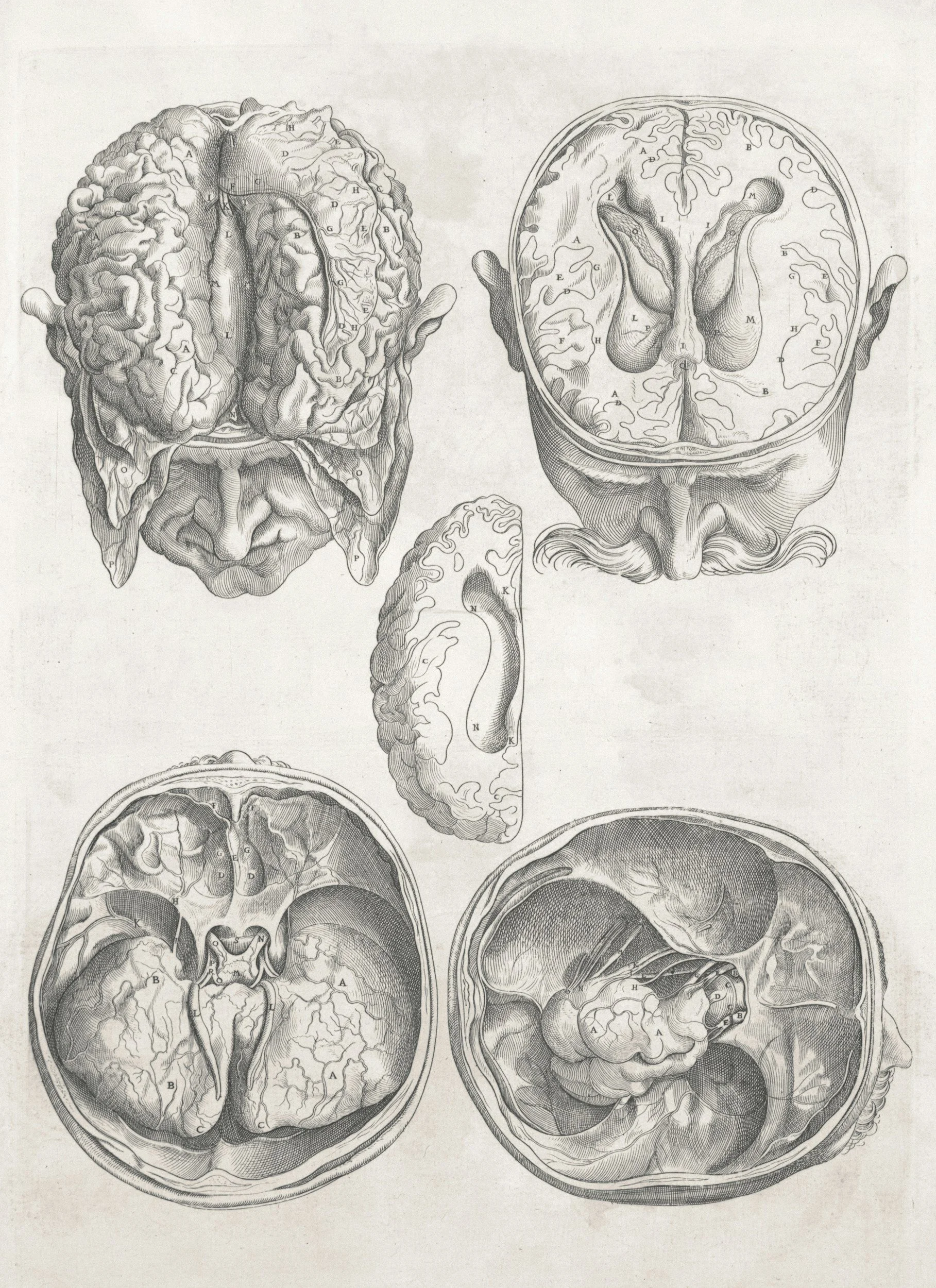
You know the feeling. You walk into a room and forget why. Words sit on the tip of your tongue. By mid-afternoon your head feels like it's full of cotton. Brain fog is incredibly common and incredibly frustrating. But here's something most people are never taught: your brain has its own built-in cleanup system, and how well it runs may have a lot to do with how clear you feel.
Your brain takes out the trash
Every active organ in your body produces metabolic waste, and your brain is no exception. For a long time we didn't fully understand how the brain cleared that waste, since it doesn't have lymphatic vessels the way the rest of the body does.
More recent research points to what's called the glymphatic system. It's a network that uses the flow of cerebrospinal fluid to wash waste products out of the brain, mostly while you rest and sleep. Think of it as the night-shift cleaning crew for your nervous system.
Why rhythm and mobility matter
That cleanup depends on flow. Cerebrospinal fluid moves in a subtle, rhythmic tide around your brain and spinal cord, and the membranes that surround them need to be mobile for that rhythm to move freely. When those membranes are restricted from old injuries, surgery, tension, or stress, that flow can be less efficient.
The bones of the skull play a role here too. Rather than being fused and rigid, they connect at sutures that allow for subtle motion that supports the craniosacral rhythm. Areas like the frontal bone at the forehead, the temporal bones at the sides of the head, the sphenoid (a central keystone bone that connects to nearly every other bone in the skull), and the occipital base at the back, where major drainage channels exit, all contribute to how freely the system moves.
There's one more layer that makes this mobility so important. Your cranial nerves, the twelve pairs of nerves that control everything from your vision to your facial movement to your digestion, exit the skull through small openings in these very bones. The sphenoid provides passage for the nerves that move your eyes. The temporal bone carries the nerves for hearing, balance, and facial movement. And near the occipital base is where the vagus nerve exits on its way to helping regulate your rest-and-digest response. When these bony passages move freely, the nerves traveling through them have the room they need to do their job.
What the research says
Research from neurosurgery teams at Brown University and in France, brain imaging work from Yale, and the research team at the Upledger Institute has taken a close look at how cerebrospinal fluid is made, moves, and drains. Several of their findings line up closely with how we think about this work.
Your nervous system state affects CSF. The fluid-producing tissue in the brain is wired to the autonomic nervous system. The stress side slows CSF production, while the rest-and-digest side increases it.
There's a rhythm. CSF doesn't just flow in one direction. It also moves in a pulsing, back-and-forth pattern, driven mainly by your heartbeat with help from your breathing.
The craniosacral rhythm has been measured. A 2021 study using sensitive instruments recorded a slow rhythmic motion of the head averaging about 6 cycles per minute, separate from both heartbeat and breathing. The motion was tiny, around 58 micrometers, and matched the phases CST practitioners describe feeling by hand. A newer theory proposes this rhythm comes from pacemaker-like neurons in the brainstem and travels through the autonomic nervous system, though that idea is still being tested.
Turnover slows with age. CSF is renewed about four to five times a day in young adults, dropping to about three times a day by the late 70s. As turnover slows, metabolic waste may build up in the brain.
Sleep matters. The brain's cleanup system is most active during deep sleep. Get your sleep.
The same researchers are clear that much of this science is still evolving, and a lot of it comes from animal studies. That's exactly why we talk about supporting your body's natural drainage rather than making big promises.
Coming up in Part 2
Cleaning is only half the job. Once your brain collects its waste, it has to leave, and the exits can get crowded. In Part 2, we'll follow that drainage out of the skull, look at the thoracic inlet and the diaphragms that can help or hinder it, and talk about where craniosacral therapy fits in.
Sources
Brinker T, Stopa E, Morrison J, Klinge P. A new look at cerebrospinal fluid circulation. Fluids and Barriers of the CNS, 2014;11:10.
Sakka L, Coll G, Chazal J. Anatomy and physiology of cerebrospinal fluid. European Annals of Otorhinolaryngology, Head and Neck Diseases, 2011;128:309–316.
Ratner V, Gao Y, Lee H, Elkin R, Nedergaard M, Benveniste H, Tannenbaum A. Cerebrospinal and interstitial fluid transport via the glymphatic pathway modeled by optimal mass transport. NeuroImage, 2017;152:530–537.
Rasmussen TR, Meulengracht KC. Direct measurement of the rhythmic motions of the human head identifies a third rhythm. Journal of Bodywork and Movement Therapies, 2021;26:24–29.
Rasmussen T, Larson A, Langnes Shear D. The CranioSacral Rhythm: From Clinical Observation to Pacemaker Theory. Upledger Institute International.