
Clearing the Path
Brain Fog, Part 2: Clearing the Path
In Part 1, we talked about your brain's cleanup crew: the glymphatic system, which uses cerebrospinal fluid to wash metabolic waste out of the brain, mostly while you sleep. But cleaning is only half the job. Once that waste is collected, it has to leave. And if the exits are crowded, that's where things can back up.
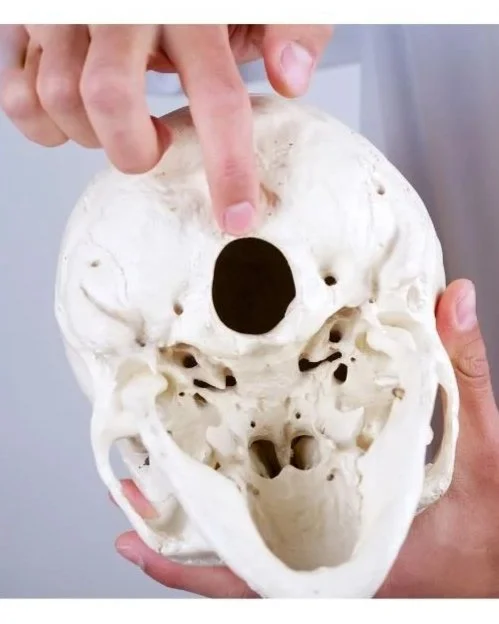
Where the waste goes
Waste leaves the brain by more than one route. Much of it passes through arachnoid granulations, tiny valve-like projections that poke through the dura into the venous sinuses of the skull. From there, venous blood exits through the jugular foramen, an opening at the base of the skull between the temporal and occipital bones. It's where the jugular vein begins and where the vagus nerve passes through.
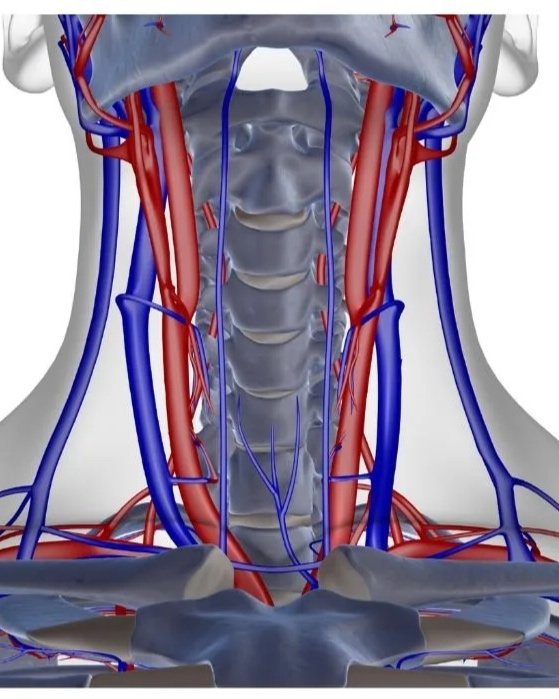
The rest drains through the lymphatic system. Fluid travels along the sheaths of cranial nerves like the optic, trigeminal, facial, and vestibulocochlear nerves, and through the cribriform plate behind the nose into the nasal tissue, before reaching the lymph nodes of the neck. That lymphatic route is bigger than researchers once thought: animal studies estimate that roughly 40 to 50 percent of cerebrospinal fluid may drain this way.
The thoracic inlet and your diaphragms
All of that drainage has to pass through the thoracic inlet, the crossroads at the base of the neck where so many vessels travel between the head and the chest. When that area is tight or restricted, it can become a bottleneck. Gently freeing it up can support better venous and lymphatic return, giving drainage a clearer path to flow in the right direction.
The thoracic inlet is one of several horizontal "diaphragms" that span the body. From the top down: the suboccipital region at the base of the skull, the hyoid at the throat, the thoracic inlet, the respiratory diaphragm beneath the lungs, and the pelvic diaphragm, your pelvic floor. When one is restricted, it can pull on the others.
The research backs up why this whole stack matters:
Breathing moves lymph. In one study, fluid moving through the lymph nodes of the neck sped up on the inhale and paused on the exhale.
Pressure travels. Cerebrospinal fluid pressure shifts with breathing, abdominal pressure, jugular venous pressure, posture, and physical activity.
Position matters. Even a simple change in body position can change how well the brain's cleanup system works.
Where craniosacral therapy fits in
This is exactly the kind of work craniosacral therapy supports. By improving the mobility of the craniosacral system, releasing the diaphragms, and encouraging thoracic inlet expansion, CST helps support your body's natural drainage and rhythm. Not by "flushing toxins," but by helping your own systems move the way they're designed to. Also helping the rest of the system to communicat better!
One piece of the puzzle
Here's the honest part, and it matters: brain fog is rarely about just one thing. Bloodwork, hormones, thyroid function, blood sugar, sleep, nutrition, and stress all play important roles, and sometimes the biggest wins come from addressing those.
Craniosacral therapy can be a meaningful piece of the puzzle, but it works best alongside the rest of your care team. That's why collaboration is key. If we can support your body's drainage and you're getting the right workup and support elsewhere, that's where real, lasting clarity tends to come from.
If brain fog has been part of your story, let's talk about whether this piece of the puzzle might help.
Sources
Brinker T, Stopa E, Morrison J, Klinge P. A new look at cerebrospinal fluid circulation. Fluids and Barriers of the CNS, 2014;11:10.
Sakka L, Coll G, Chazal J. Anatomy and physiology of cerebrospinal fluid. European Annals of Otorhinolaryngology, Head and Neck Diseases, 2011;128:309–316.
Ratner V, Gao Y, Lee H, Elkin R, Nedergaard M, Benveniste H, Tannenbaum A. Cerebrospinal and interstitial fluid transport via the glymphatic pathway modeled by optimal mass transport. NeuroImage, 2017;152:530–537.