
Is Craniosacral Therapy a "real" treatment?
What the research says about craniosacral therapy
An honest look at the evidence for CST and how it might help you
If you've heard about craniosacral therapy (CST) and wondered whether there's real science behind it, you're asking the right question. The research isn't perfect—no therapy's is—but there's actually a solid body of evidence showing that CST can help with certain conditions. Here's what we know, based on rigorous studies. I will be taking my first course in October and I can’t wait to bring more evidence to this work. Dr. Tiffany is having fantastic results with her care and I am excited to learn this “magic” technique.
What is craniosacral therapy?
Craniosacral therapy is a gentle hands-on technique where a trained therapist applies light pressure to specific points on your head, spine, and sacrum. The theory is that it helps normalize the flow of fluid around your nervous system and reduces tension. Whether you believe the mechanistic explanation or not, what matters for you is whether it works—and that's what research measures.
1: CST significantly reduces pain
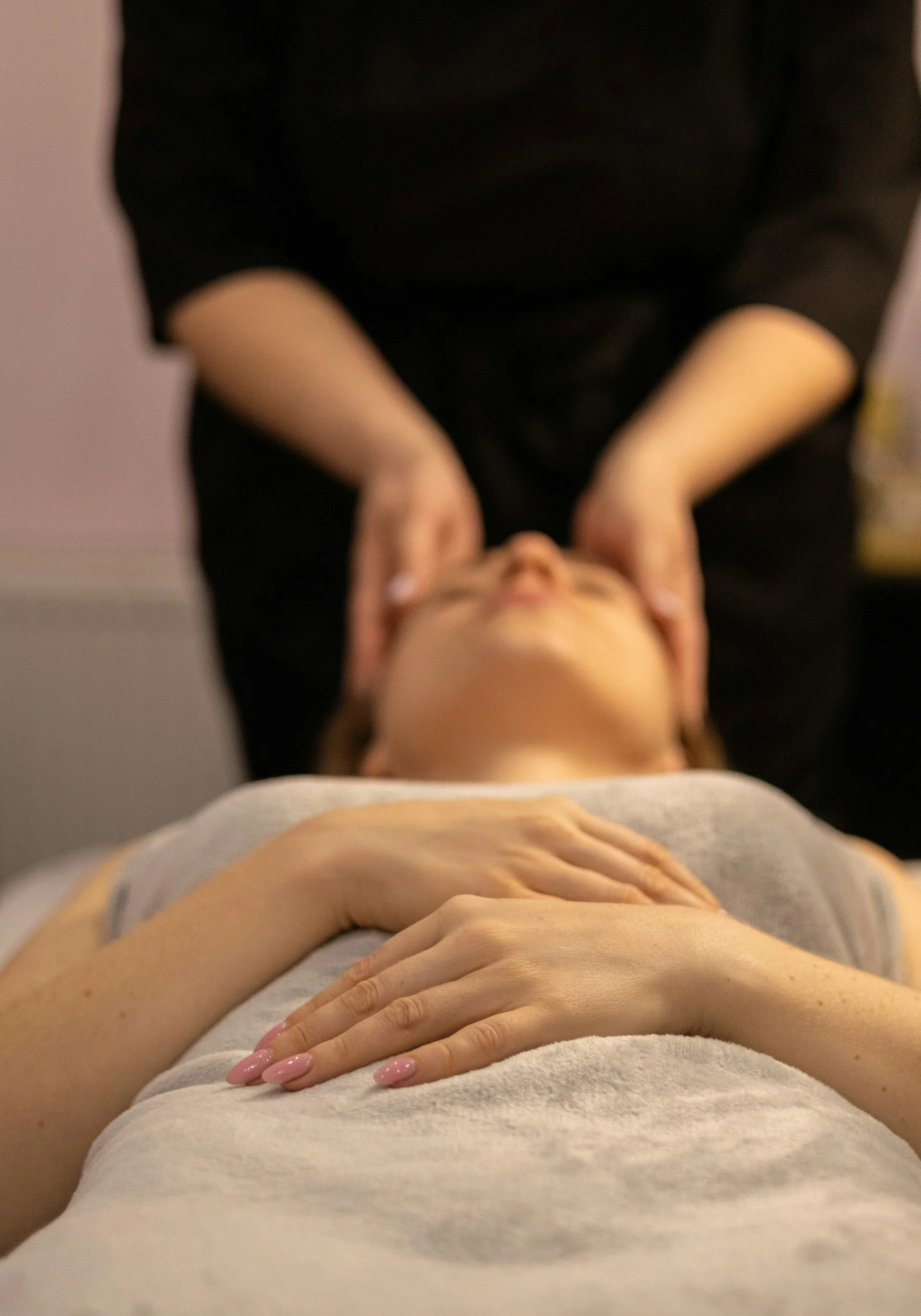
The strongest evidence for craniosacral therapy comes from a meta-analysis of 10 rigorous studies involving 681 patients. These weren't casual surveys—they were randomized controlled trials, which is the gold standard in research.
The findings? CST showed meaningful pain reduction compared to doing nothing, compared to fake treatments, and even compared to other hands-on therapies. The improvements held up at 6-month follow-ups, meaning the benefit lasted.
2: It improves function, not just comfort
Reduced pain is one thing. But what about actually doing life better? The same large study found that patients improved on disability measures—meaning they could move more freely, return to activities, and rely less on pain to limit what they do.
This matters because true recovery isn't just feeling better; it's being able to work, play, and live the way you want to.
3: CST has a strong safety record
In the large controlled studies reviewed, serious side effects were rare. Most patients reported either no adverse effects or only minor ones (like brief headache or fatigue).
That said, CST to the spine should be approached cautiously if you have pre-existing spinal conditions. Your therapist should screen for this, but it's worth bringing up during your consultation if you have concerns
This is why seeing a trained practitioner matters—they know what to look for and when to refer you elsewhere.
4: Emerging evidence on stress and the nervous system
Beyond pain, evidence suggests CST may influence your autonomic nervous system — the system that controls things like heart rate, breathing, and your fight-or-flight response. Our hand placement is along the distribution of nerves for social engagement (Cranial nerves V, VII, IX, X and XI) which also give sensation to the dura, ear, head, and face.
A controlled physiological study found that cranial techniques triggered measurable changes in autonomic function (measured via skin blood flow). But this research is still preliminary; larger studies are needed to say exactly how meaningful these effects are for real patients. We have seen changes with patients HRV and BP throughout the day as well as measured by wearables.
If you're interested in CST partly for stress relief or anxiety, it may help—but more research is underway. Don't rely on it as your only treatment for anxiety or depression.
Study: Keller et al., PLoS One (2024). The mechanisms are being studied but remain incompletely understood.
5: Real-world patient outcomes are encouraging
Beyond controlled trials, researchers have followed patients in regular clinical practice. A 2021 study tracked 220 primary-care patients receiving CST and found that most reported decreased symptoms, improved quality of life, and reduced reliance on medication.
These aren't perfect studies (real-world results are messier than controlled labs), but they suggest benefits extend beyond the research setting into everyday practice.
A note on limitations: While the evidence is encouraging, researchers consistently call for more high-quality studies. Craniosacral therapy is best thought of as one tool in your wellness toolkit, especially for chronic musculoskeletal pain. It pairs well with physical therapy, medical care, and other approaches. It's not a replacement for diagnosis or treatment of serious conditions.
The bottom line
If you have chronic pain—particularly neck, back, jaw, or pelvic pain—or if you're interested in a gentle approach to stress and tension, the evidence suggests CST is worth trying. It's safe, it's been studied, and the research shows real results for many people. More to come after my first class (Tiffany’s 4th) in October.
The best next step? Talk to a trained craniosacral therapist about your specific situation. Not all pain is the same, and not all therapists are the same either.
Ready to learn if CST is right for you?
Book a consultation with Dr. Tiffany to discuss your health goals and see how craniosacral therapy might help.
Research sources
[1] Haller H, Lauche R, Sundberg T, Dobos G, Cramer H. Craniosacral therapy for chronic pain: a systematic review and meta-analysis of randomized controlled trials. BMC Musculoskeletal Disorders. 2019;21(1):1. doi:10.1186/s12891-019-3017-y.
[2] Haller H, Dobos G, Cramer H. The Use and Benefits of Craniosacral Therapy in Primary Health Care: A Prospective Cohort Study. Complementary Therapies in Medicine. 2021;58:102702. doi:10.1016/j.ctim.2021.102702.
[3] Harrison RE, Page JS. Multipractitioner Upledger CranioSacral Therapy: Descriptive Outcome Study 2007-2008. Journal of Alternative and Complementary Medicine. 2011;17(1):13-7. doi:10.1089/acm.2009.0644.
[4] Keller M, Perlitz V, Pelz H, et al. Specificity of cranial cutaneous manipulations in modulating autonomic nervous system responses and physiological oscillations: A controlled study. PLoS One. 2025;20(2):e0317300. doi:10.1371/journal.pone.0317300.
[5] Bis M, Tarnawski AS. Craniosacral Therapy and the Pathophysiology of the Craniosacral System: Mechanisms, Controversies, and Proposed Future Research Directions. Journal of Physiology and Pharmacology : An Official Journal of the Polish Physiological Society. 2026;77(1):15-24. doi:10.26402/jpp.2026.1.02.
[6] Jäkel A, von Hauenschild P. A Systematic Review to Evaluate the Clinical Benefits of Craniosacral Therapy. Complementary Therapies in Medicine. 2012;20(6):456-65. doi:10.1016/j.ctim.2012.07.009.